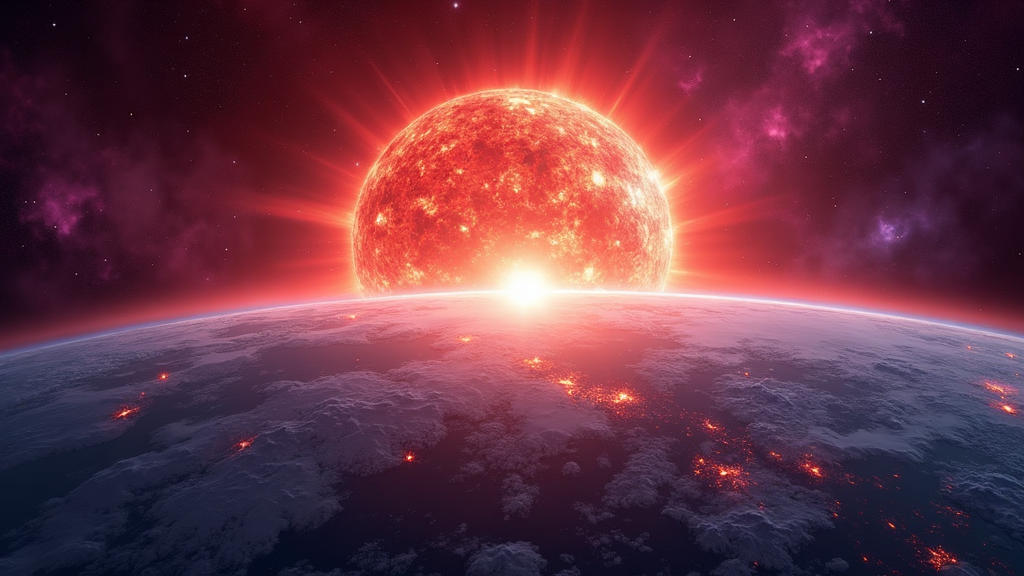
Solar storms are powerful events resulting from the Sun’s intense activity, and they’re more frequent than we might think. Recently, the sunspot group AR 4455 has produced a series of eruptions, including coronal mass ejections (CMEs) that are expected to lead to significant geomagnetic storms on Earth. These explosive solar phenomena can disrupt communications and power systems while creating breathtaking auroras in the skies. As scientists monitor these solar activities, it’s crucial to understand the implications of these storms on our planet. By staying informed and prepared, we can navigate the potential impacts of this solar storm effectively.
When we refer to solar storms, we are discussing the intricate interplay of solar activity that can manifest as geomagnetic disturbances. These turbulent phenomena arise from coronal mass ejections, during which large amounts of plasma and magnetic fields are hurled toward Earth, leading to geomagnetic storms. Monitoring celestial patterns, such as sunspot groups and solar flares, is essential for anticipating the effects of such natural events on technology and the environment. Moreover, these eruptions can illuminate the night sky with stunning auroras, captivating observers around the world. By understanding these solar dynamics, we can appreciate the cosmic forces that influence our daily lives.
Understanding Solar Storms and Their Impact
Solar storms, caused by massive eruptions of energy and plasma from the Sun, have profound effects on Earth and our technological systems. Recently, the sunspot group AR 4455 generated an intense burst of activity, including high-magnitude solar flares and coronal mass ejections (CMEs). These solar phenomena trigger geomagnetic storms that can disrupt radio communications, satellite functionality, and power grids across the globe. The predicted geomagnetic storm levels between G4 and G5 suggest that areas experiencing intense solar activity will face enhanced challenges, from brownouts to disruptions in navigation systems.
Geomagnetic storms are classified based on the K-index, which measures the disturbances in Earth’s magnetic field caused by solar events. Understanding these classifications helps astronomers and meteorologists predict potential impacts. Furthermore, warning systems in place allow for proactive measures to mitigate damage arising from such storms. For example, airlines may reroute flights over polar regions to avoid communication blackouts, and power companies prepare their grids for potential fluctuations. As technology becomes increasingly dependent on reliable communications, effective action plans during heightened solar activity are essential to maintaining public safety and service continuity.
The Role of Coronal Mass Ejections in Geomagnetic Storms
Coronal mass ejections are massive bursts of solar wind and magnetic fields rising above the solar corona or being released into space. As noted in recent forecasts, the CMEs generated by sunspot group AR 4455 are expected to interact within interplanetary space, creating a compounding effect that amplifies their impact when they reach Earth. The rapid succession of these ejections can lead to powerful shock waves that result in severe geomagnetic storms. This phenomenon underscores the importance of monitoring solar activity, as even minor fluctuations in solar wind speed can dramatically alter the outcome of these geomagnetic impacts.
When CMEs collide with Earth’s magnetic field, they can cause currents to flow through the ionosphere, leading to vibrant auroras in high-latitude regions. These stunning natural light displays are direct visual representations of how solar activity affects our planet. In addition to their beauty, these storms can create concerns for technological systems. Electrical grids can experience overloads due to induced currents, while satellites in low Earth orbit may face increased drag from the altered atmospheric conditions. Understanding the science behind CMEs and their interactions is vital for preparedness as we face increasingly intense solar storms.
Potential Links Between Solar Activity and Seismic Events
Recent observations raise intriguing questions about the possible connections between solar activity and seismic events, particularly near tectonic boundaries like the Cascadia Subduction Zone. The occurrence of earthquakes near the time of high solar activity suggests a need for further research into how solar-induced ionization might influence tectonic activities. Increased ionization can alter telluric currents, which are electric currents that flow through the Earth, potentially affecting the stress on geological formations and triggering seismic events.
While establishing a direct link between solar activity and seismic events is complex, the coinciding timing of notable earthquakes with heightened solar energy emissions hints at an interconnection that warrants attention. Understanding how cosmic events influence terrestrial phenomena can inform our approach to disaster preparedness, including monitoring solar cycles as part of earthquake preparedness strategies. As we delve deeper into these correlations, we might uncover new insights into the dynamics of Earth’s geology and the potential for proposing early warning systems.
Preparing for the Effects of Intense Solar Activity
As we navigate periods of intense solar activity, like the recent surge associated with sunspot group AR 4455, it is crucial to be prepared and informed. High-magnitude solar storms pose risks not only to technology and infrastructure but also to individuals’ overall well-being. Ordinary activities like using GPS, communication devices, and electrical appliances may become unreliable, warranting a proactive approach to minimize disruptions. Additionally, communities should come together to prepare for potential outages by developing contingency plans to ensure public safety.
Personal preparedness can involve simple yet effective strategies. Staying informed about solar forecasts through space weather agencies enables individuals to anticipate potential disruptions. Limiting screen time during peak activity, ensuring backup power supplies, or utilizing alternative navigation methods can help mitigate impacts. Furthermore, embracing nature—like walking barefoot on the ground to reconnect with Earth—can enhance personal energy levels amid heightened solar activity. By embracing these strategies, we not only shield ourselves from the immediate consequences of solar storms but also appreciate our connection to the broader universe.
Monitoring Space Weather and Its Importance
Monitoring space weather is critical not only for scientific research but also for safeguarding our infrastructure and communities. Organizations like NASA and NOAA play pivotal roles in providing real-time data on solar activity, allowing communities to prepare for potential geomagnetic storms. By assessing solar flare activity and coronal mass ejections, these agencies forecast impacts on Earth, offering timely alerts to mitigate risks across various sectors, from transportation to telecommunications.
The importance of space weather monitoring extends beyond merely predicting storms. It encompasses understanding the underlying mechanics of solar activity, making it essential for effective decision-making and resource allocation. Educational outreach can help raise awareness about solar phenomena and the importance of preparedness. As global reliance on technology increases, fostering a culture of awareness regarding space weather will empower individuals and organizations to adapt and thrive in a changing cosmic context.
Auroras: Nature’s Light Show and Its Connection to Solar Activity
Auroras, often referred to as the Northern and Southern Lights, provide breathtaking displays of color in the night sky, directly linked to solar storms. When coronal mass ejections collide with Earth’s magnetic field, they liberate charged particles that excite atmospheric gases, producing vibrant displays of light. The ongoing solar activity associated with sunspot group AR 4455 promises to enhance these mesmerizing natural phenomena, potentially allowing observers farther south to witness these celestial exhibitions.
The beauty of auroras serves as a reminder of the powerful relationship between the Earth and the Sun. They not only captivate spectators but also serve scientific purposes by providing insights into the dynamic interactions occurring in the Earth’s magnetosphere. As we link the occurrence of auroras to solar cycles, we gain a better understanding of solar-terrestrial relationships and their implications for our planet. As these cosmic events continue to evolve, the merging of science and wonder becomes apparent through the beauty of auroras.
The Interconnectedness of Solar Activity and Planetary Systems
The ongoing solar activity highlights the intricate interconnectedness between the Sun, our planet, and the broader cosmic environment. Understanding this relationship is vital for recognizing how changes in solar energy can influence various Earth systems, from atmospheric dynamics to geological events. The intensity of solar storms reminds us of our dependence on the Sun’s energy, as fluctuations can lead to widespread effects on technology, climate patterns, and even biological processes.
As we delve deeper into the connection between solar activity and planetary systems, it becomes evident that ongoing research is essential for developing predictive models that can guide our responses to solar events. By harnessing cutting-edge technology and interdisciplinary studies, scientists are able to explore how solar emissions impact Earth’s systems. This research will not only deepen our cosmic understanding but will also enhance our capacity to prepare for the unpredictable consequences of solar storms.
The Cosmic Rhythms Influencing Life on Earth
The current solar activity invites us to reflect on the cosmic rhythms that govern our existence on Earth. The ebb and flow of solar energy have far-reaching consequences on the environment, affecting everything from weather patterns to human health. By recognizing how solar events influence Earth’s systems, we gain insight into our place within this vast and interconnected universe. Attention to solar activity, as demonstrated in the case of sunspot group AR 4455, encourages us to acknowledge the nuances of our existence and the energy exchange between celestial bodies.
Observations during intense solar storms offer the opportunity to witness the impact on our planet’s systems while appreciating the broader cosmic influence shaping life. By understanding these solar cycles and their implications for terrestrial phenomena, we can foster a culture of awareness and respect for our connection to the cosmos. Each solar event invites us to consider our role within this dynamic interplay, reminding us of the delicate balance sustaining life on Earth.
The Impact of Solar Activity on Daily Life and Technology
Solar activity profoundly impacts our daily lives, especially as society becomes increasingly reliant on technology. The surge in solar flares and coronal mass ejections can disrupt GPS signals, lead to power outages, and create communication blackouts. As we’ve seen with the recent solar activities related to sunspot group AR 4455, the potential consequences of geomagnetic storms highlight the need for advanced planning to maintain technological reliability. Companies, aviation sectors, and emergency services must remain vigilant during these events to ensure operations run smoothly.
Furthermore, individuals can take practical steps to prepare for potential disruptions when solar storms are predicted. Staying informed about solar forecasts and employing precautionary measures, such as limiting dependence on navigation systems and maintaining alternative communication methods, can mitigate the adverse effects of solar storms. Ultimately, being aware of the potential impacts of solar activity emphasizes the importance of collective preparedness and awareness in our modern technological landscape.
Frequently Asked Questions
What is a solar storm and how does it relate to geomagnetic storms?
A solar storm refers to disturbances caused by solar activity, primarily linked to events like coronal mass ejections (CMEs) and solar flares. When these eruptions of solar plasma travel toward Earth, they can interact with our planet’s magnetic field, resulting in geomagnetic storms. These storms can be intense, classified typically on a scale from G1 to G5, where G4 to G5 indicates severe to extreme storms, potentially causing disruptions in communication systems, power grids, and more.
| Key Point | Details |
|---|---|
| Current Solar Activity | The Sun is highly active with multiple sunspot eruptions, including M-class and X-class flares. |
| Coronal Mass Ejections (CMEs) | Recent solar flares have caused several CMEs aimed towards Earth, likely causing a geomagnetic storm between June 5-6. |
| Effects of Solar Storm | Expected to disrupt communications (GPS, radio), enhance auroras, and strain electrical grids. |
| Connection to Seismic Activity | Recent earthquakes near the Cascadia subduction zone could be linked to the solar activity, warranting observation. |
| Public Recommendations | Stay updated on solar events, prepare for GPS disruptions, and maintain health practices during this period. |
Summary
A solar storm is approaching, marked by a significant increase in solar activity and multiple eruptions. This intense period, characterized by coronal mass ejections and geomagnetic storms, poses potential risks to our communication systems and technological infrastructure. As the storm impacts the Earth’s magnetosphere, populations may experience disruptions in GPS and radio communications, as well as stunning auroras in higher latitudes. The correlation between this solar activity and recent seismic events near the Cascadia subduction zone invites further investigation. Ultimately, raising awareness and preparedness is crucial as we navigate these celestial phenomena, emphasizing our planet’s sensitivity to solar fluctuations.
Are you looking to elevate your content game? Introducing Autowp, the powerful AI content generator and AI content creator plugin for WordPress, designed to streamline your writing process and enhance your website with tailored, high-quality content. With Autowp, you can effortlessly generate engaging articles, blog posts, and social media content that captivates your audience and improves your SEO rankings. Discover the future of content creation by visiting Autowp today! To remove this promotional paragraph, upgrade to Autowp Premium membership.